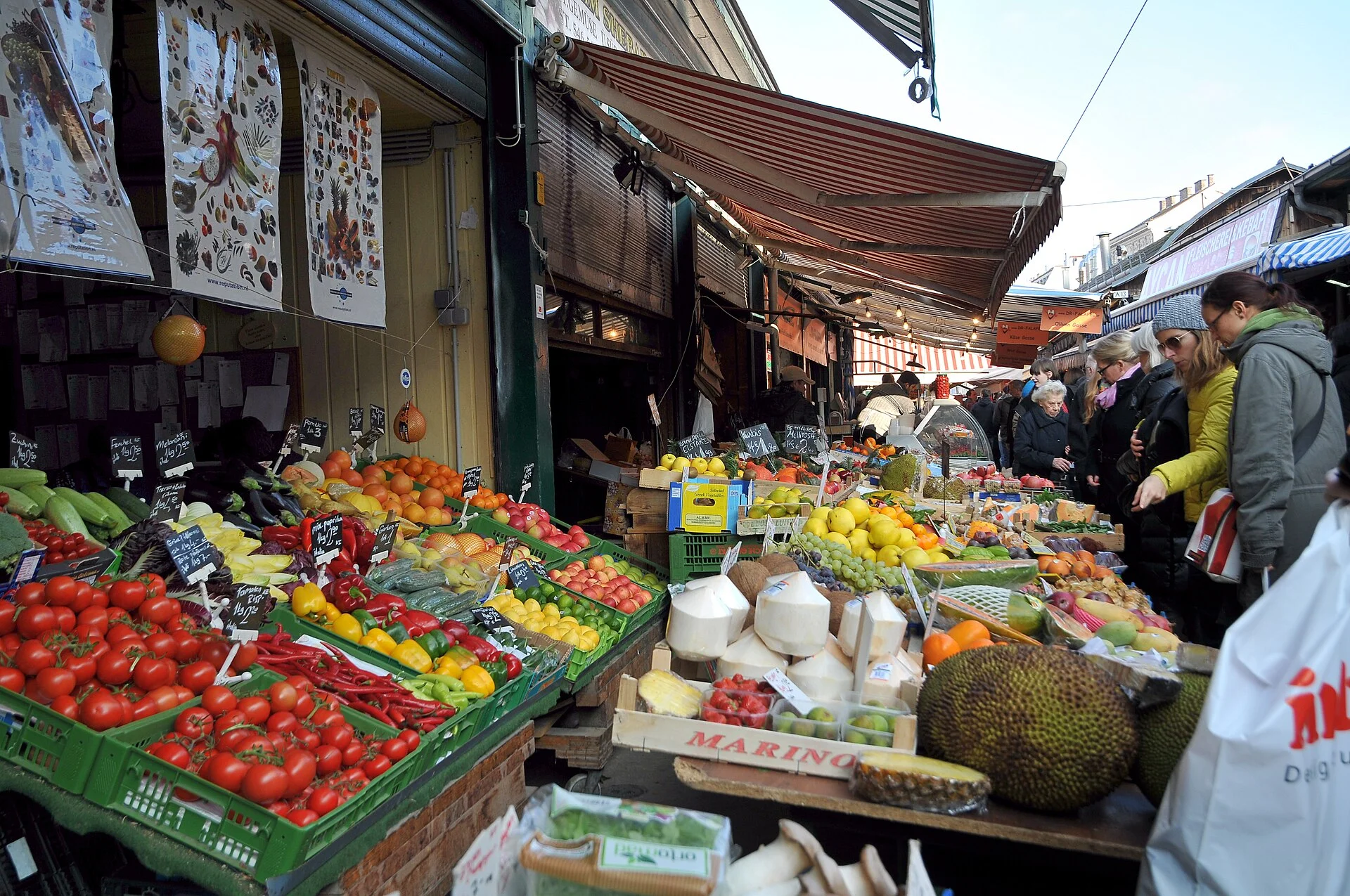
 Naschmarkt, Vienna · 2012 · © böhringer friedrich
Behind every meal is a wider system.
Think of a Saturday at a Viennese market. We see fresh produce, busy stalls, and people choosing what to buy. But behind that everyday experience lies a much wider network of relationships.
Soil and water, people and their knowledge, infrastructure, markets, and public decisions all shape how food is produced, distributed, and accessed.
Explore the connections
Five interconnected dimensions help us understand how food systems function, what they contribute, and where challenges emerge.
Every harvest begins with a living landscape.
- What shapes it
- Soils, water, climate, and living ecosystems.
- What it can shape
Food & biodiversity
Healthy soils and diverse habitats can support food production and biodiversity. Land pressure, water scarcity and cultivation choices can also create competing demands.
In practice
A garden can grow food and provide pollinator habitat, but its harvest depends on soil quality, water and the space available.
01 / The global picture
Feeding the world, sustaining the planet
Food systems connect how we produce, distribute, and access food. Worldwide, these connections shape some of our most pressing challenges, from hunger and inequality to climate change and resource pressures.
645 million
people experienced hunger, representing about 7.8% of the world's population
No single cause explains hunger. Poverty, conflict, prices and climate shocks all contribute.
World · 2025
The State of Food Security and Nutrition in the World 2026 (FAO, IFAD, UNICEF, WFP, WHO)
~30%
of global greenhouse gas emissions come from agrifood systems
Includes farming, land use and the energy used to process, transport and store food.
World · Latest FAO estimate
FAO — Energy facts and figures
1.05 billion t
of food wasted in retail, food service and households, including inedible parts
Preventing waste saves resources, but redistributing surplus alone cannot end hunger.
World · 2022
UNEP Food Waste Index Report 2024
The challenge is not only how much food we produce, but how we grow, share, and value it.
02 / Europe
Progress and pressure
These challenges affect every region differently. European farms and food businesses feed hundreds of millions of people, while facing climate change, biodiversity loss, depleted soils and water stress.
More organic land, attention to soil health and shorter supply chains signal progress. Agricultural support, environmental protection and food-safety rules shape the system. Even so, affordability and waste remain persistent pressures.
57.9 million tonnes · about 129 kg per person · 2024
- Households53%
- Food manufacturing19%
- Restaurants & food services12%
- Retail & distribution8%
- Primary production8%
Measured waste includes edible and inedible material.
European Union (EU-27) · 2024
Eurostat
More than half of measured EU food waste occurs in households. But preventing food waste requires action throughout the entire supply chain.
03 / Austria
Strengths in the soil. Challenges across the system.
Austria reflects Europe's wider challenges, while standing out for its extensive organic farming sector and strong regional food traditions.
~27%
of Austria's agricultural area was farmed organically, one of the highest shares in the EU
The EU-wide share is roughly 11%, but figures vary slightly by reporting series, so we don't chart them side by side.
Austria · 2023
European Environment Agency — Europe's environment 2025, Austria
1,175,206 t
- Avoidable
- 568,831 t (48%)
- Other
- 606,375 t
Austria · 2024
Austrian Federal Ministry (BMLUK)
Organic farmland is an important strength, not a measure of the whole food system. It doesn't guarantee affordable food, and waste figures depend on how they're measured. Austria's organic share and the roughly 11% EU share are not charted side by side because their reporting series and reference periods differ.
04 / Vienna
The food system on our doorstep
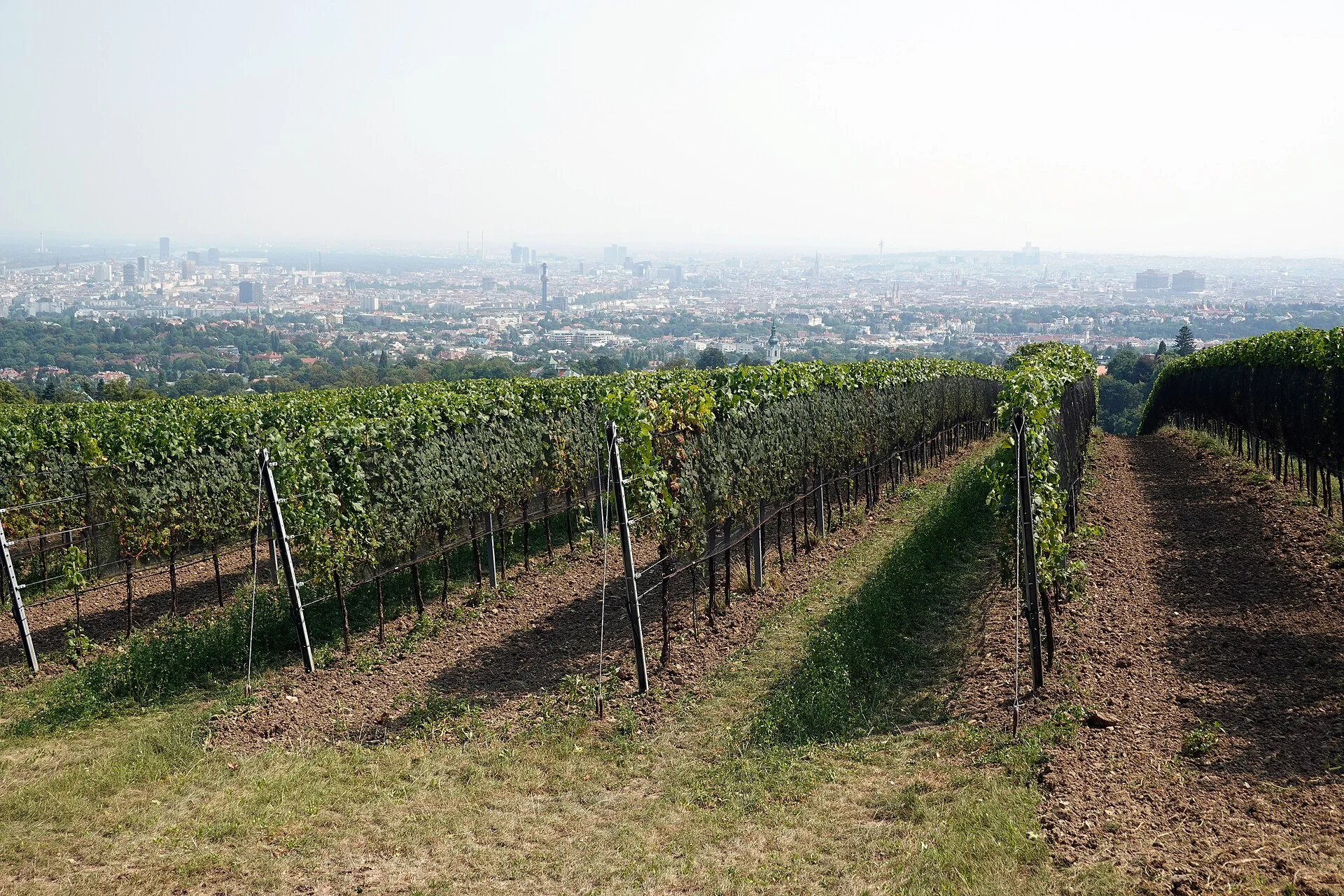
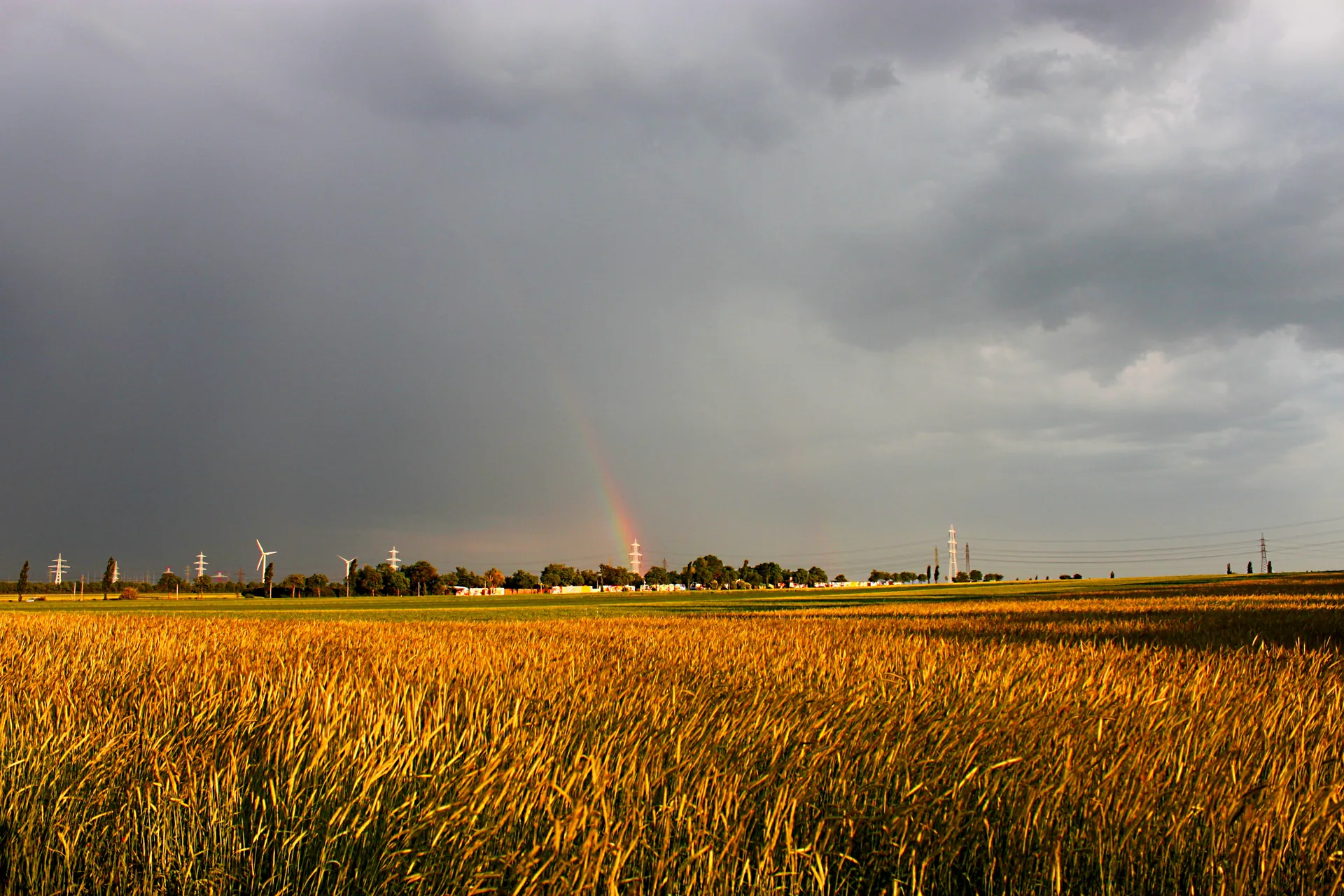
Within Austria's largest city, production remains part of the urban landscape. Fields, vineyards and greenhouses sit inside the city limits, closely connected to the farming regions around them.
These figures follow the City's urban-agriculture baseline. Other monitoring series use different reference periods and definitions; they are not interchangeable with this city-only land measure.
~6,300 ha
of agricultural land inside the city limits
Vienna · As reported by the City of Vienna
City of Vienna — urban agriculture baseline
~34%
of that farmland is managed organically
Vienna's organic share covers land within the city only, so it isn't directly comparable with national figures.
Vienna · As reported by the City of Vienna
City of Vienna — urban agriculture baseline
01
Protecting farmland
As the city grows, its fields matter for regional food, healthy soil and green space. AgSTEP 2024 identifies agricultural areas to safeguard long term.
Read the agricultural development plan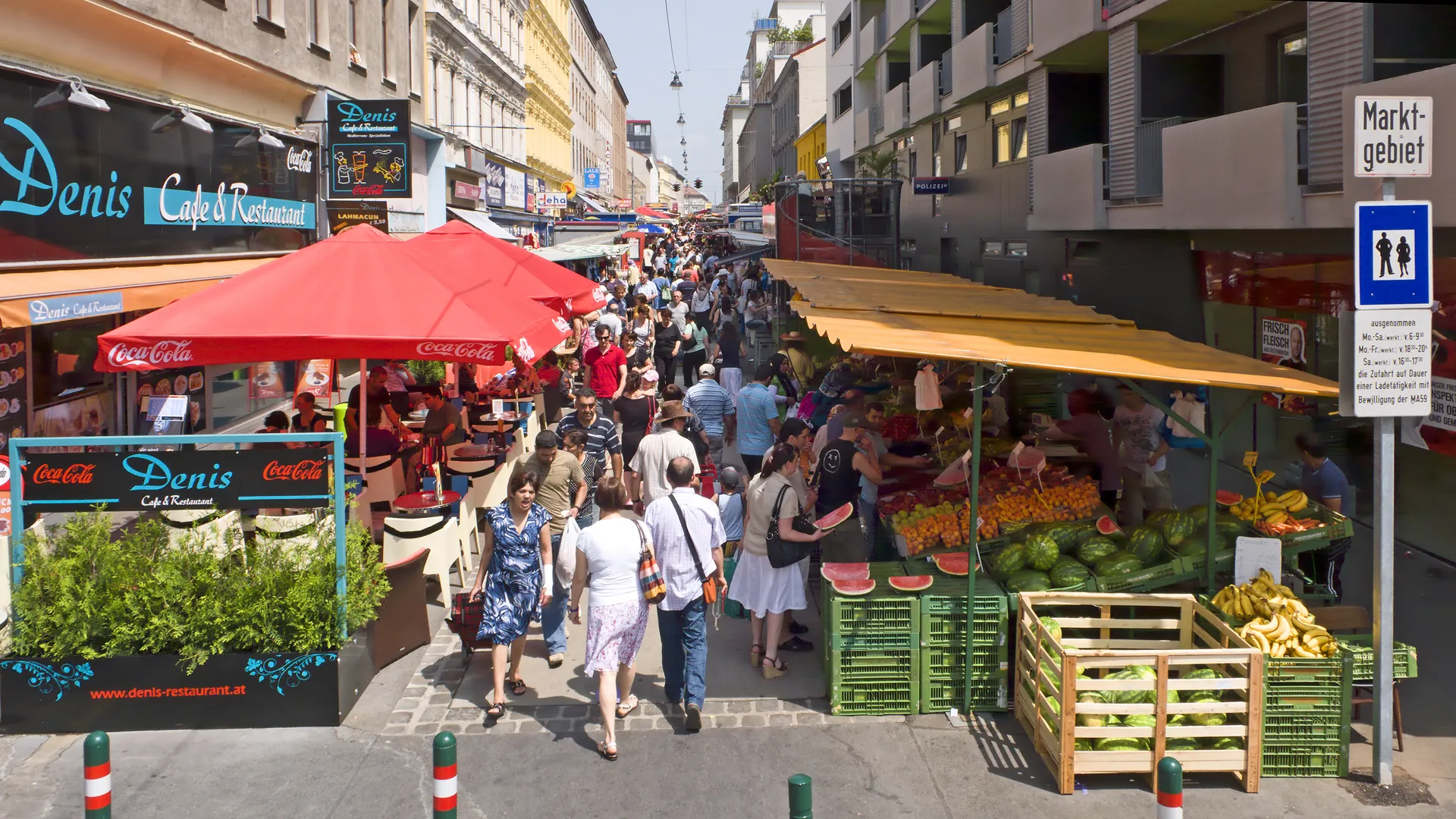
02
Public food policy
Vienna's “Wien isst G.U.T.” action plan connects public kitchens and procurement with sustainable food, waste prevention and food education.
Read the food action plan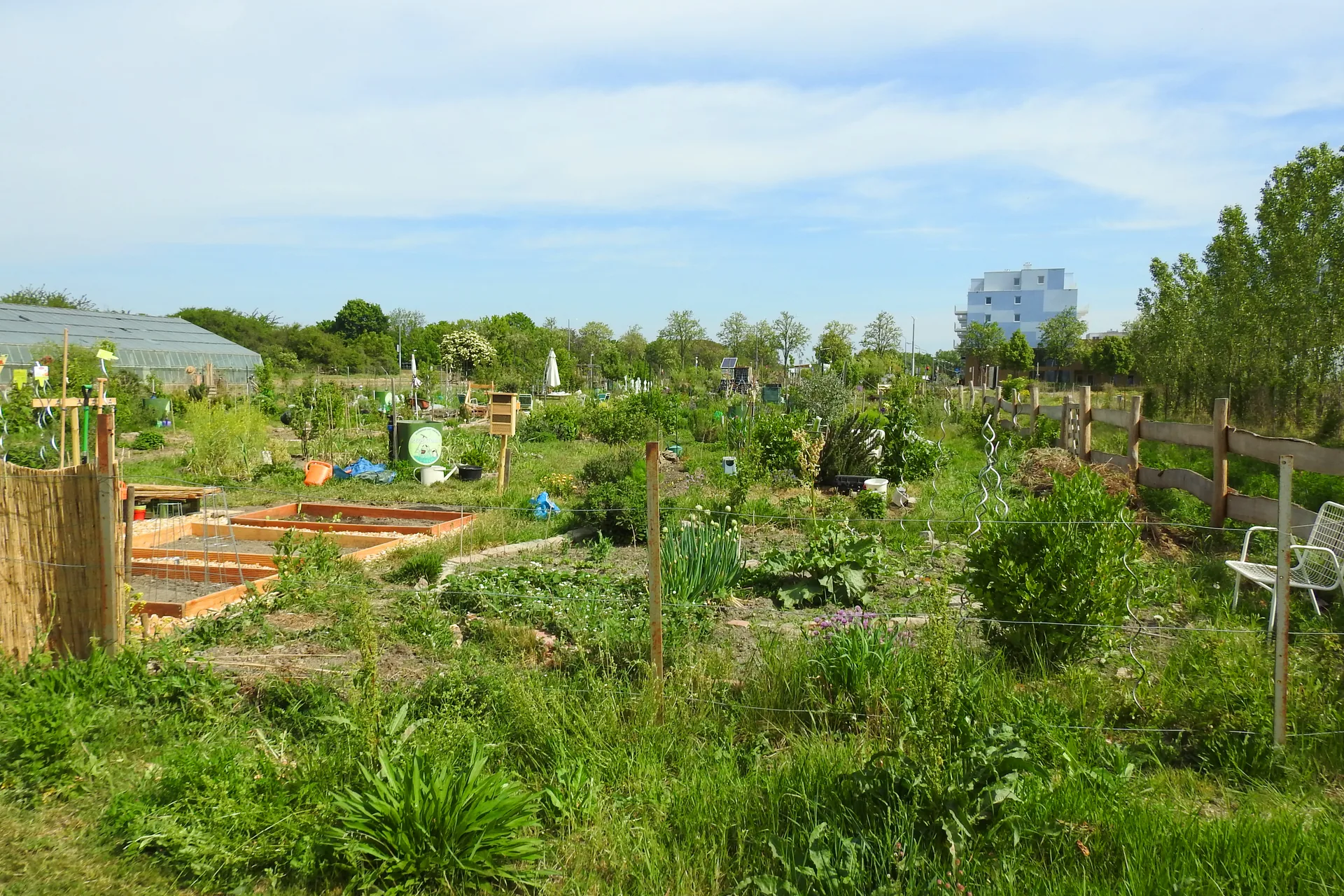
03
Beyond conventional farming
Gardens, co-ops, rescue groups, researchers and networks widen the ways people can take part. Their goals vary; not every local effort has a measurable city-wide effect.
From understanding to action
Different initiatives. Different ways to change the food system.
Farmland and policy are only part of the story. Farms, gardens, cooperatives, research groups and social organizations each contribute through different activities.
Sources and further reading
Global
Austria
Last updated: November 2026. Publication and reference years can differ; each figure shows its reference year.
Photography
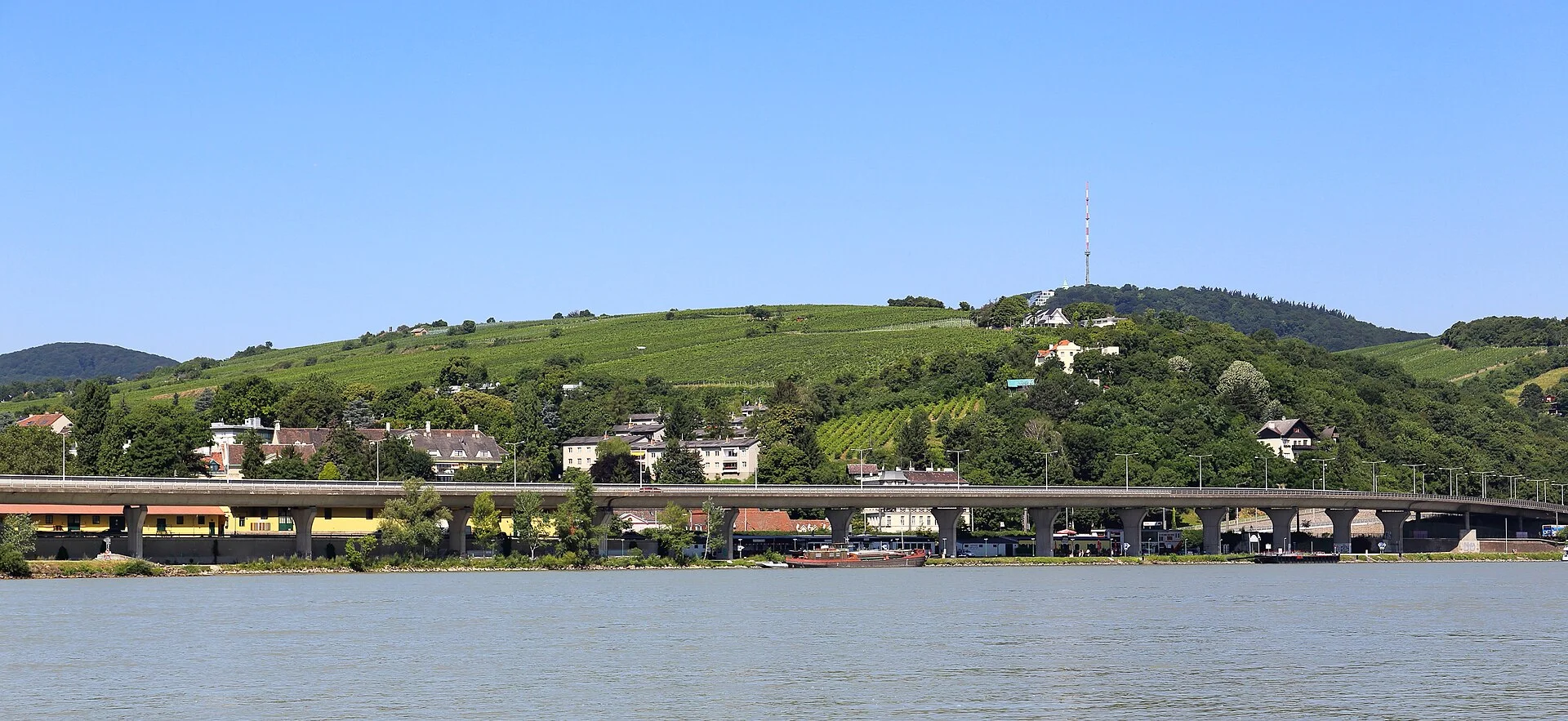
- Naschmarkt, Vienna · 2012 · © böhringer friedrich · CC BY-SA 3.0 AT
- Nussberg, Vienna · 2016 · © C.Stadler/Bwag · CC BY-SA 4.0
- Reisenberg, Vienna · 2025 · © Geolina163 · CC BY-SA 4.0
- Oberlaa fields, Vienna · 2016 · © Fxp42 · CC BY-SA 3.0
- Brunnenmarkt, Vienna · 2016 · © Peter Gugerell · Public domain
- Donaufeld community garden, Vienna · 2020 · © Arquus · CC BY-SA 4.0
Photographs resized and cropped for this page; shared under their original licenses.